


How to play with space and light: architect's secrets
Light is the interior architect's first material. Here's how I capture it, diffuse it, and magnify it to transform your spaces.
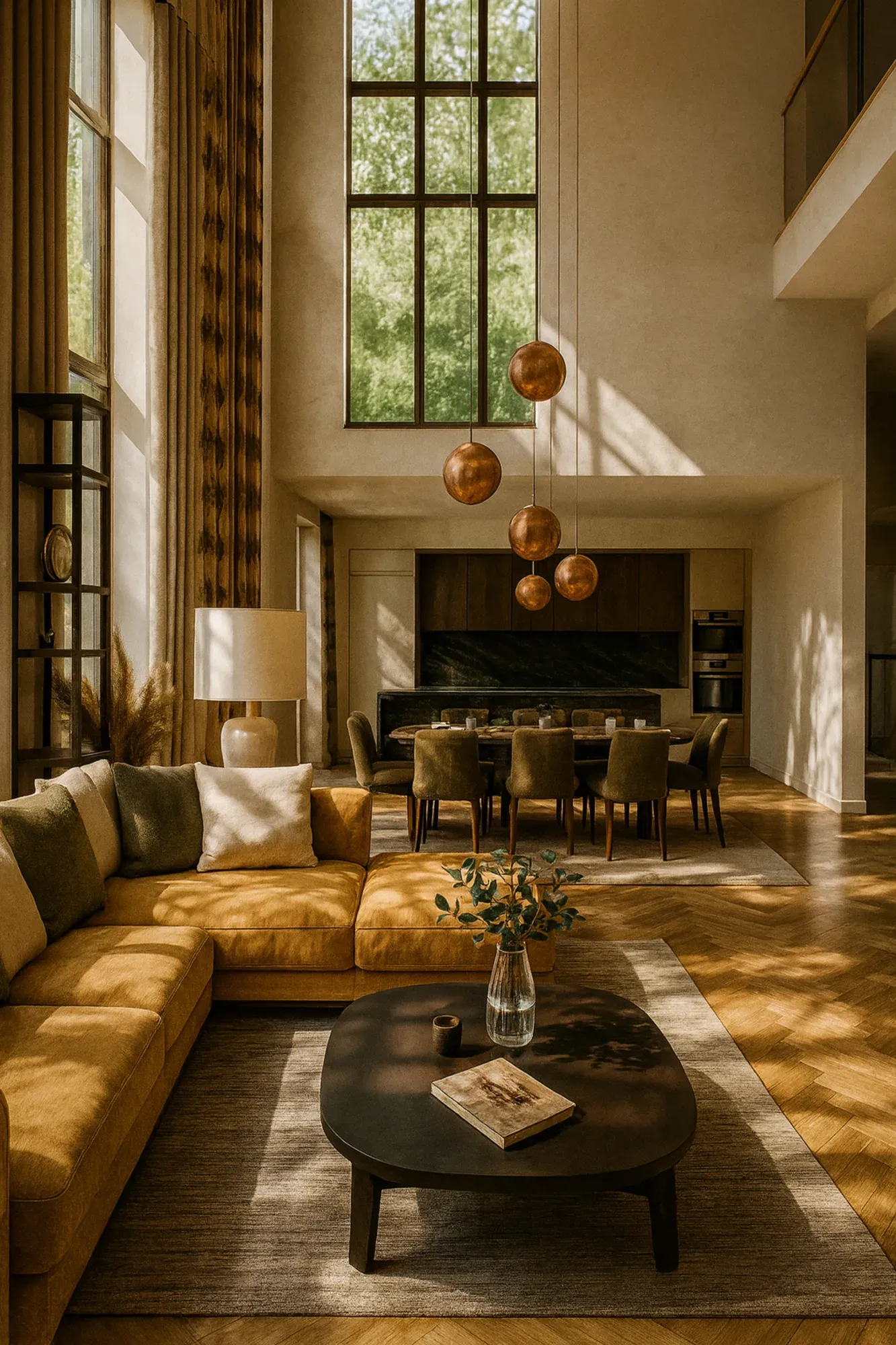
Light, this invisible material
When I visit a space for the first time, before even looking at the walls or floors, I seek the light. Where does it come from? At what time of day is it most beautiful? What obstacles prevent it from circulating?
Because light is the first material of our profession. A space bathed in natural light appears larger, more serene, more alive. And conversely, a dark interior, even spacious, can feel cramped and oppressive.
Understanding the natural light of your space
Orientation, the key to everything
A south-facing apartment doesn't have the same needs as a north-facing one. It's obvious, but how many projects forget this!
South-facing: Warm and abundant light, but beware of summer overheating. We'll favour cool colours and suitable blinds.
North-facing: Soft and constant light, ideal for working. To compensate for the lack of warmth, we'll use warmer tones.
East-facing: Beautiful morning light, perfect for bedrooms and kitchens. In the evening, artificial lighting takes over.
West-facing: Intense late-afternoon light, magnificent for living spaces. Watch out for summer glare.
The play of seasons
In Geneva, we experience real seasons. December light has nothing in common with June light. A good project anticipates these variations and proposes spaces that work all year round.
Maximising natural light
Mirrors and reflective surfaces
This is decorators' best-kept secret. A large mirror placed opposite a window literally doubles the perceived light. But take care: positioning must be studied carefully to avoid unwanted reflections.
Lacquered surfaces, polished metals, and glazed furniture play the same role on a more subtle scale.
Light colours
Obvious? Perhaps. But I am always surprised to see poorly lit apartments painted in dark shades. Off-white, pearl grey, and soft beige reflect and amplify light.
This doesn't mean giving up colour! A dark accent wall can coexist with light walls. It's all about balance.
Freeing the windows
Sheer curtains, blinds that open wide, furniture that doesn't block openings. Every centimetre of light gained counts.
Strategic artificial lighting
When the sun sets - and it sets early in Swiss winters - artificial lighting takes over. But beware: poor lighting can destroy an atmosphere, while good lighting elevates it.
The three types of light
General lighting: To see, quite simply. A ceiling light, recessed spots, diffuse light that illuminates the entire room.
Task lighting: To create zones. A reading lamp by the sofa, a pendant over the dining table, a floor lamp in a corner.
Ambient lighting: To move emotions. Candles, indirect LEDs, decorative fixtures. This is what makes the difference between a functional space and a place where you feel good.
Colour temperature
A technical detail that changes everything. "Warm white" bulbs (2700-3000K) create a cosy atmosphere, perfect for living spaces. "Neutral white" (4000K) is better suited to kitchens and offices.
Playing with volumes
Creating depth
A narrow corridor can feel less stifling with a few tricks: flooring laid lengthwise, a perspective created by a painting at the end, lighting that guides the eye.
Exploiting heights
In Geneva, some older buildings offer beautiful ceiling heights. This is an extraordinary asset! Floor-to-ceiling bookshelves, curtains that touch the floor, suspended light fixtures that draw the eye upwards.
Opening up spaces
Sometimes the simplest solution is to knock down a partition. An open-plan kitchen-living room immediately feels larger and brighter. But beware of technical issues - load-bearing walls, ventilation, sound insulation.
Does your apartment lack light? Let's talk about it. Together, we'll find solutions to reveal its full potential.
Written by Alix Muller Luthi, founder of Maison Kawa, interior architect in Geneva.
Related articles
Apartment renovation in Geneva: where to start?
Renovating an apartment in Geneva is a major undertaking. Here are the key steps to carry it through serenely, from design to key handover.
Interior Architecture in Geneva: Complete Guide 2026
Thinking of transforming your interior in Geneva? Here's everything you need to know to bring your project to life in 2026.
Have an interior architecture project? Let's talk.
Book a consultation